
Care homes are moving from copper landlines to all-digital calling. By January 2027 the UK’s old PSTN will be switched off, so every provider will deliver calls over broadband. That deadline has already been pushed once to protect telecare users, which tells us two things: the change is real, and quality and safety matter. If we get the upgrade right, residents, families, clinicians and staff all benefit with clearer calls, faster response and simpler workflows.
Key takeaways
- Prioritise the network first. Full fibre where available, QoS on the LAN, and power resilience keep call quality high and emergency access reliable.
- Choose endpoints to fit care. Mix IP desk phones, DECT handsets and mobile apps so nurses can roam, front-of-house can triage, and managers can join from anywhere.
- Follow a staged path. Survey, pilot, install, train and review. Bake in compliance, 999 access and battery backup from day one.
How can care homes upgrade to cloud phone systems that deliver reliable voice quality?
Cloud telephony replaces on-site phone boxes with hosted VoIP. Calls travel over your broadband, and handsets register to a secure cloud PBX. For voice to sound clear, we focus on three pillars: the access connection, a clean internal network, and the right handsets or apps.
Ofcom reports that full-fibre now passes roughly three quarters of UK homes, which makes a strong foundation for care sites that can order it. Where fibre is not yet available, use the most stable service you can and add quality controls on the LAN.
What “good” sounds like on a network
Plan for one-way latency below 150 ms, minimal jitter and near-zero packet loss. These are the thresholds the industry has used for years to keep conversations natural, and they remain a practical target in care environments.
The building blocks that make voice quality predictable
Start with the broadband. Order business-grade full fibre where it is available. It gives you lower latency, more stable uploads and clearer calls at busy times. Ofcom’s Spring 2025 update shows 74% full-fibre coverage, rising quickly. If your postcode is outside the footprint, we still improve quality by reserving bandwidth for voice and avoiding contention.
Harden the LAN. Put IP phones and softphones on a voice VLAN, turn on QoS, and trust markings end to end. Reserve at least 80 to 100 kbps per concurrent G.711 call, including overhead, so your busiest hour still sounds crisp.
Choose endpoints that fit care workflows. DECT over IP gives cordless reliability around the building. Wi-Fi 6 handsets or mobile apps suit homes with modern wireless and bring messaging and video into one device. Desk phones remain ideal for reception and nurse stations. ETSI’s DECT standard remains purpose-built for low-latency voice, while Wi-Fi suits sites standardising on smartphones.
Quick view: endpoint options for care homes
| Option | Best use | Coverage method | Pros | Considerations |
|---|---|---|---|---|
| DECT over IP handsets | Carers on the move | Multi-cell DECT with overlap | Rock-solid roaming, long battery life | Plan cell density, add repeaters where walls are thick |
| Wi-Fi handsets | Sites with strong Wi-Fi 6 | Existing AP grid | One device for voice and alerts | Needs tight Wi-Fi design and roaming tuning |
| Mobile app softphones | Seniors team, managers | Wi-Fi or 4G/5G | Least hardware, easy updates | Train on headset use, enforce MDM |
| IP desk phones | Reception, nurse station | Wired PoE | Always ready, easy for agency staff | Fixed location |
From assessment to install: a practical upgrade path
Begin with a site survey. Map the building, wall materials, and resident areas. Test Wi-Fi heatmaps and DECT signal, measure latency and jitter at busy times, and list critical devices like telecare gateways, lift lines or fire panels. Document which lines must be protected during power cuts or broadband outages. Government guidance and Ofcom both stress reliable emergency access, with providers expected to offer at least one hour of power resilience for 999 calls.
Design the network. Where possible, order full fibre. Segment voice, assign QoS, and set failover paths. For multi-site groups, use SD-WAN or managed VPNs so calls between homes and head office keep low latency. Size bandwidth for your busiest hour using concurrent call estimates and your chosen codec. As a rule of thumb, G.711 consumes about 80 to 90 kbps per call once you include protocol overhead.
Deploy the handsets and apps. Reception and nurse stations get PoE desk phones. Carers get DECT or Wi-Fi handsets with roaming tested on rounds. Managers use softphone apps that also handle family video calls or GP teleconsults. ETSI describes DECT as a short-range, low-latency voice technology, which is why it remains a safe bet for cordless telephony in care buildings.
Plan for safety. Ensure 999 calls work during power cuts with the right battery backup and a fallback path. Ofcom’s current position expects a minimum of one hour’s power resilience for access to emergency services. For vulnerable users and telecare, follow DHSC’s Telecare National Action Plan and TSA guidance during the digital switchover.
Train and go live. Keep training practical and short. Teach call pickup, park, transfer with warm introductions, and escalation paths. Show teams how to use app presence and group paging. Run a supervised pilot week, check call logs, tweak ring groups, and publish a one-page quick-start.
As a provider, we deliver hosted VoIP, business broadband and unified comms with UK support, so homes get one team for survey, install, training and care. Use our care home phone system page to explore options and case-fit features like call routing, voicemail to email and hunt groups.
Obstacles we solve early
Power and emergency access. Digital lines need power at the premises. Provide battery backup for the router and phone base so a resident or carer can still dial 999. Review which analogue devices need a different path, because telecare alarms do not dial 999 and are outside the one-hour obligation. Coordinate with your telecare provider on a digital gateway or mobile unit.
Analogue to digital timing. The PSTN switch-off is scheduled for January 2027. That feels distant until you factor procurement and landlord approvals. Homes that move now reduce risk and avoid last-minute installs.
Wi-Fi vs DECT debate. DECT remains superb for voice roaming and battery life. Wi-Fi handsets and apps shine if your wireless is already optimised and you want messaging or video on the same device. We often deploy both, then standardise after real-world trials.
Bandwidth myths. You do not need gigabits for voice, you need stable upstream and QoS. A typical uncompressed call needs roughly 80 to 90 kbps including overhead. Size for simultaneous calls, not headcount.
What this unlocks for care and the road ahead
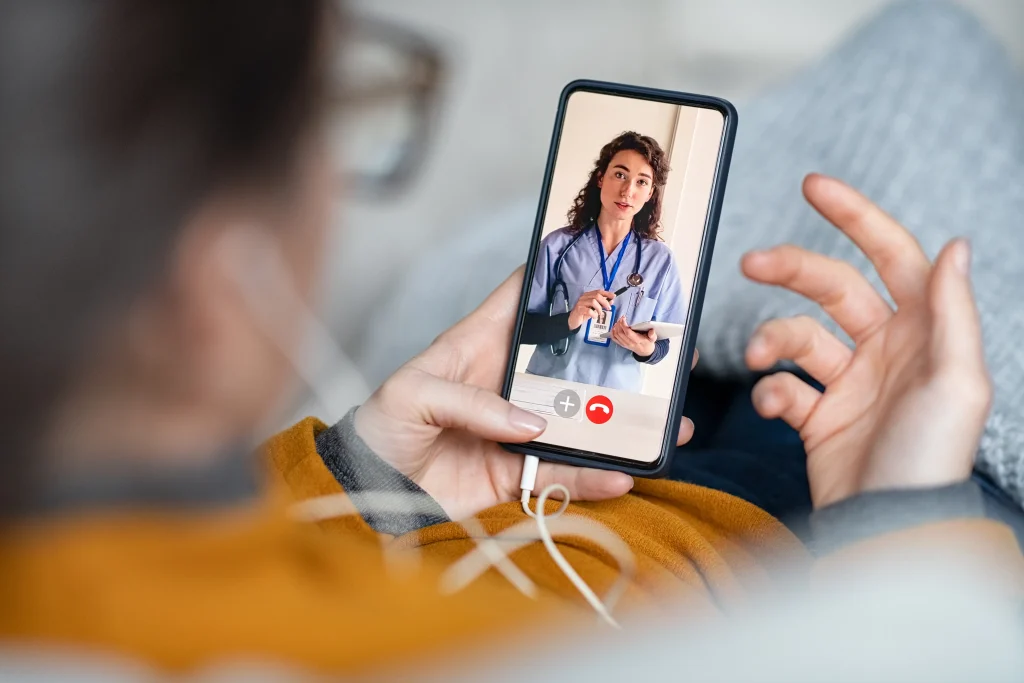
Clearer calls speed response. When carers reach colleagues on the first try, falls and escalations drop. As homes adopt Digital Social Care Records, the same network also carries secure data and video calls with GPs and families. Government statistics show DSCR uptake in CQC-registered locations has reached about three quarters and continues to rise, so network readiness will pay off beyond voice.
Regulation will keep tightening. Ofcom is actively monitoring 999 access and caller location for VoIP providers. Expect continued focus on power resilience and accuracy, so design once and stay compliant.
Simplicity beats sprawl. A single cloud PBX for the group, with role-based profiles and standard handsets, is easier to train, easier to support and easier to audit against CQC outcomes.
EEAT: why we care about getting this right
We implement telecoms across regulated environments, so we plan upgrades with safety, compliance and day-to-day care at the centre. We map resident areas, test signal in lift lobbies and medication rooms. We also work with telecare partners to avoid gaps during the analogue to digital shift. Our approach is pragmatic: start small, measure, improve, roll out.
We track the evidence too. Ofcom’s Connected Nations updates help us judge access options. ITU G.114 underpins our latency targets. Government and TSA guidance shape our power backup and migration plans. Evidence in, jargon out.
FAQs: care home cloud phone upgrade
When do we need to move off analogue? The PSTN is due to switch off by January 2027. Plan now to avoid last-minute capacity crunch.
How much bandwidth do we need for calls? Size for concurrent calls. A G.711 call is roughly 80 to 90 kbps including overhead. Ten active calls need under 1 Mbps upstream if QoS is configured.
Will phones work in a power cut? Only if you add backup power at the premises. Providers are expected to offer at least one hour of power resilience so 999 calls still work.
Is DECT better than Wi-Fi for carers? Both can be excellent. DECT is built for voice and roaming. Wi-Fi handsets and apps add messaging and video if your wireless network is strong. Many homes use a mix.
How do we protect telecare during the switch? Coordinate early with your telecare supplier. The one-hour emergency requirement applies to 999 calls, not telecare alarms, so you may need specific digital gateways or mobile-backed units.
What latency should we target? Keep one-way delay under 150 ms for natural conversations.
Do we need full fibre? It is the best base for stable, low-latency voice and video. Coverage is growing fast across the UK. If you cannot get it yet, design QoS and failover on what you have.
Conclusion
Upgrading care home telecoms is not just swapping phones. It is an end-to-end project that starts with the access line, cleans up the LAN and fits endpoints to care tasks. If we prioritise fibre where possible, set QoS, plan power resilience and train our teams well, we get clear calls, faster response and calmer shifts. The 2027 deadline is a useful milestone, but the real win is better care and happier families.
Reach out to us
Planning an upgrade or want a quick health check on your current setup? Tell us your biggest pain point and the number of concurrent calls you see at busy times, and we will map a simple path forward. Explore our approach for care providers here: https://circle.cloud/care-homes-phone-system/