Many small businesses still rely on communication systems that were never designed for modern work. Fixed desk phones, limited mobility, and infrastructure tied to legacy networks can create unnecessary friction in day-to-day operations. Teams become harder to reach, response times slow down, and scaling communication across the business becomes more complex than it needs to be. As organisations transition to VoIP and cloud telephony, DECT VoIP phones are becoming a practical and reliable alternative. The best DECT VoIP phones combine wireless flexibility with consistent call quality, allowing employees to stay connected while moving around the workplace. This makes them particularly useful for environments where staff are not always desk-based.
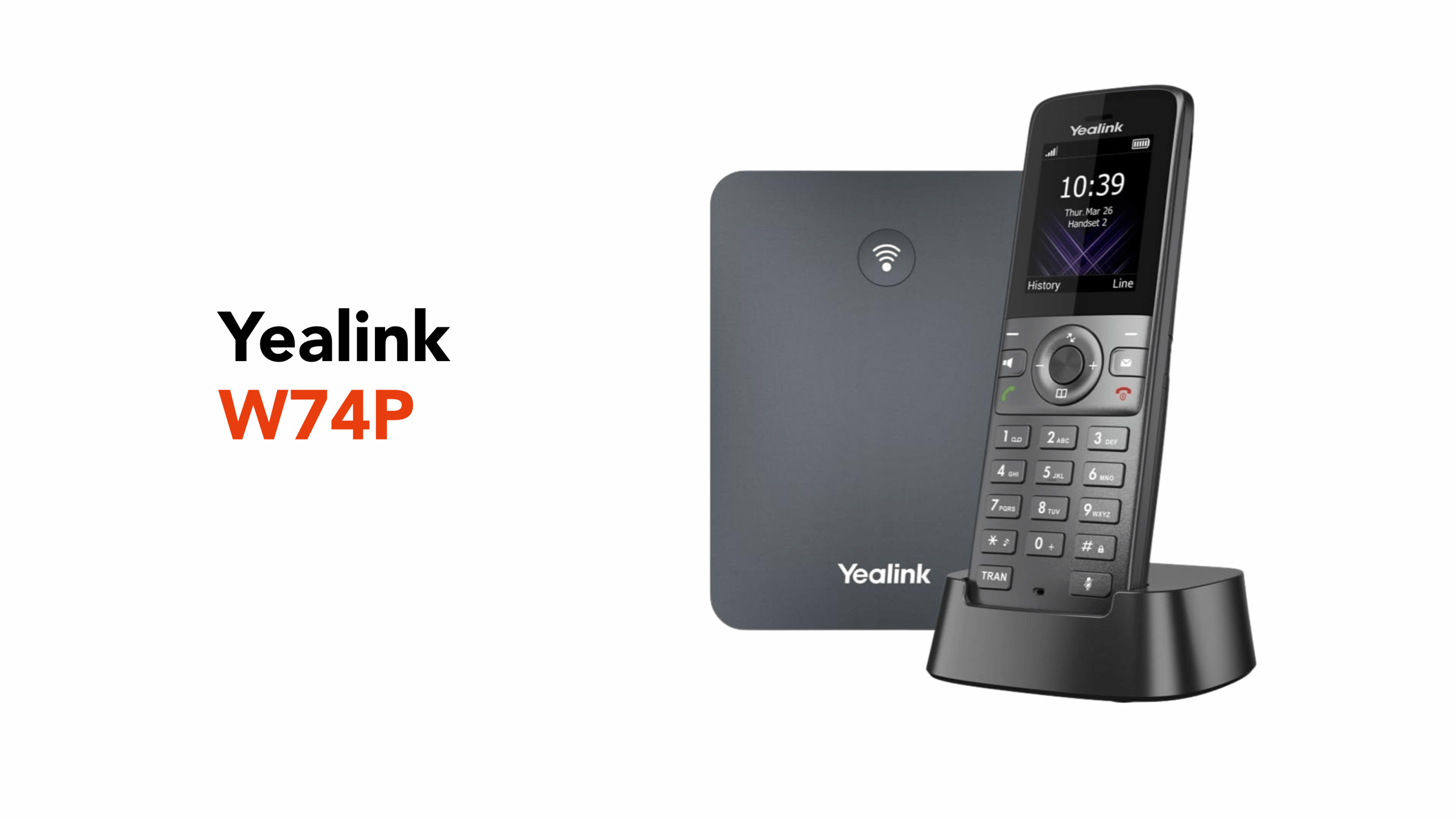
Among the available options, the Yealink W74P stands out as a strong choice for small businesses. It offers a balance of mobility, scalability, and ease of use, making it suitable for growing teams that need dependable communication without unnecessary complexity.
The challenge is choosing the right system for your business. Not all DECT VoIP phones deliver the same level of performance or flexibility, and selecting the right solution requires understanding how your team works today and how your communication needs will evolve over time.
What Makes the Best DECT VoIP Phones for Small Business?
The best DECT VoIP phones for small businesses are not defined by features alone. They need to support how teams actually work day to day, whether that involves moving around the workplace, handling customer calls, or managing communication across multiple areas.
Key considerations include mobility across the workplace, ensuring staff can stay connected without being tied to a desk, and reliable call quality so conversations remain clear and professional. Ease of setup and management is also important, particularly for SMEs that may not have in-house technical support. As businesses grow, scalability becomes essential, allowing additional users or handsets to be added without complexity. Compatibility with VoIP phone systems is another key factor, ensuring the device integrates seamlessly with cloud telephony platforms.
For most SMEs, simplicity and reliability matter more than advanced or unnecessary features. A system that works consistently, is easy to manage, and supports everyday communication will deliver far more value than one that is overly complex.
Key Benefits of DECT VoIP Phones
DECT VoIP phones combine wireless flexibility with reliable voice communication, making them well-suited to modern business environments. They allow teams to stay connected while moving around the workplace, without compromising call quality or performance.
Wireless Flexibility
DECT phones allow employees to move freely across the workplace while staying connected to calls. This is especially valuable in environments such as retail, hospitality, and warehouses where staff are rarely at a desk. It enables quicker response times, better internal communication, and a more efficient customer experience.
Reliable Call Quality
Unlike standard Wi-Fi calling, DECT technology is designed specifically for voice communication. This helps deliver consistent audio quality with minimal interference, even in busy or high-traffic environments. For businesses, this means clearer conversations and fewer disruptions during important calls.
Scalable Communication
Most DECT systems support multiple handsets connected to a single base station, making it easy to expand as your business grows. New users can be added without complex installation or additional infrastructure, allowing organisations to scale their communication setup in a simple and cost-effective way.
Simple Deployment
DECT VoIP phones are typically straightforward to install and configure, even for businesses without dedicated IT support. Integration with VoIP phone systems is usually quick, allowing teams to get up and running without delays. This simplicity makes them a practical choice for SMEs looking for reliable communication without unnecessary complexity.
Popular DECT VoIP Phones for Small Business
There are several DECT VoIP phones available, but not all are suited to small business environments. The best options combine reliability, ease of use, and the ability to scale as your team grows. Below are some of the most commonly used DECT VoIP phones for small businesses, including where the Yealink W74P fits within the market.
Yealink W74P
The Yealink W74P is one of the most widely used DECT VoIP phones for small business environments. It offers high-quality audio performance, support for multiple handsets, and seamless integration with cloud telephony platforms. It also provides reliable wireless coverage within business environments. The system is designed for businesses that need mobility without sacrificing call quality.
Yealink W76P
The Yealink W76P offers similar functionality to the W74P but with enhanced performance and greater capacity. It is designed for businesses that expect higher call volumes or anticipate future growth. With support for more concurrent calls and additional handsets, the W76P is well-suited to larger teams or more demanding environments. It provides the same mobility and VoIP integration benefits, while offering extra headroom for organisations planning to scale their communication infrastructure.
Other DECT VoIP Phone Brands
In addition to Yealink, several other brands offer DECT VoIP phones suitable for small business use, each with different strengths depending on your requirements. Gigaset is known for reliable and cost-effective devices, making it a popular choice for smaller teams or businesses with basic communication needs. Snom provides robust DECT VoIP solutions designed for professional environments, often used by offices and multi-site organisations that require dependable performance. Panasonic, traditionally associated with legacy systems, also offers DECT models that support VoIP and are suitable for businesses transitioning from older setups. Grandstream is another widely used option in VoIP environments, offering strong compatibility with cloud phone systems and a good balance of features and affordability.
Entry-Level DECT VoIP Options
For smaller teams, entry-level DECT VoIP phones can provide a cost-effective starting point. However, they may offer limited scalability and fewer advanced features compared to models like the W74P.
Where the Yealink W74P Fits
The Yealink W74P sits in the middle of the market, offering a strong balance between performance, scalability, and simplicity. It is designed for businesses that need more than entry-level functionality but do not require the complexity of high-capacity enterprise systems. This makes it a practical choice for many SMEs looking to modernise their communication without overcomplicating their setup.
For many small and growing businesses, it provides:
- Enough capacity to support expanding teams without needing to replace the system.
- Reliable performance for day-to-day operations, ensuring consistent call quality.
- Flexibility for mobile working environments where staff are not desk-based.
- Easy integration with VoIP phone systems and cloud telephony platforms.
It is particularly well-suited to:
- Retail businesses where staff need to move across shop floors while staying reachable.
- Healthcare and care facilities require fast, reliable communication.
- Professional services operating in flexible or shared workspaces.
- Multi-room or multi-floor offices that require seamless internal communication.
This positioning makes the Yealink W74P a strong all-round option for businesses that want a future-ready DECT VoIP system without unnecessary complexity.
Choosing the Right DECT VoIP Phone for Your Business
Not every business needs the same solution. For small teams with basic requirements, entry-level devices may be sufficient. However, for growing organisations, scalable systems like the Yealink W74P often provide better long-term value by supporting expansion without the need for replacement. The decision should be based on how your team communicates, whether mobility is required, your future growth plans, and how well the system integrates with VoIP phone systems. As UK businesses move away from PSTN, choosing a VoIP-ready solution is becoming essential for maintaining reliable and flexible communication.
Build a Reliable DECT VoIP Setup
Choosing the best DECT VoIP phones for a small business is about more than selecting a device. It is about building a communication system that supports your business. At circle.cloud, we help UK businesses implement simple, reliable VoIP phone systems designed for modern work. From DECT phones to business broadband and cloud telephony, every part of the setup is designed to work together. If you are planning to upgrade your business telecoms or move from PSTN to VoIP, speak to our team. We will help you choose the right system for your business today and as it grows.
FAQs:
What is a DECT VoIP phone?
A DECT VoIP phone combines wireless DECT technology with Voice over Internet Protocol, allowing businesses to make calls over the Internet while remaining mobile.
Are DECT VoIP phones better than Wi-Fi phones?
DECT phones are generally more reliable for voice communication, as they use dedicated frequencies designed for call quality.
Is the Yealink W74P suitable for small businesses?
Yes. It offers a balance of scalability, reliability, and ease of use, making it ideal for SMEs.
Can DECT VoIP phones support multiple users?
Yes. Most systems allow multiple handsets to connect to a single base station, supporting growing teams.
Do DECT VoIP phones require an internet connection?
Yes. They rely on a VoIP connection, which means a stable business broadband connection is essential.