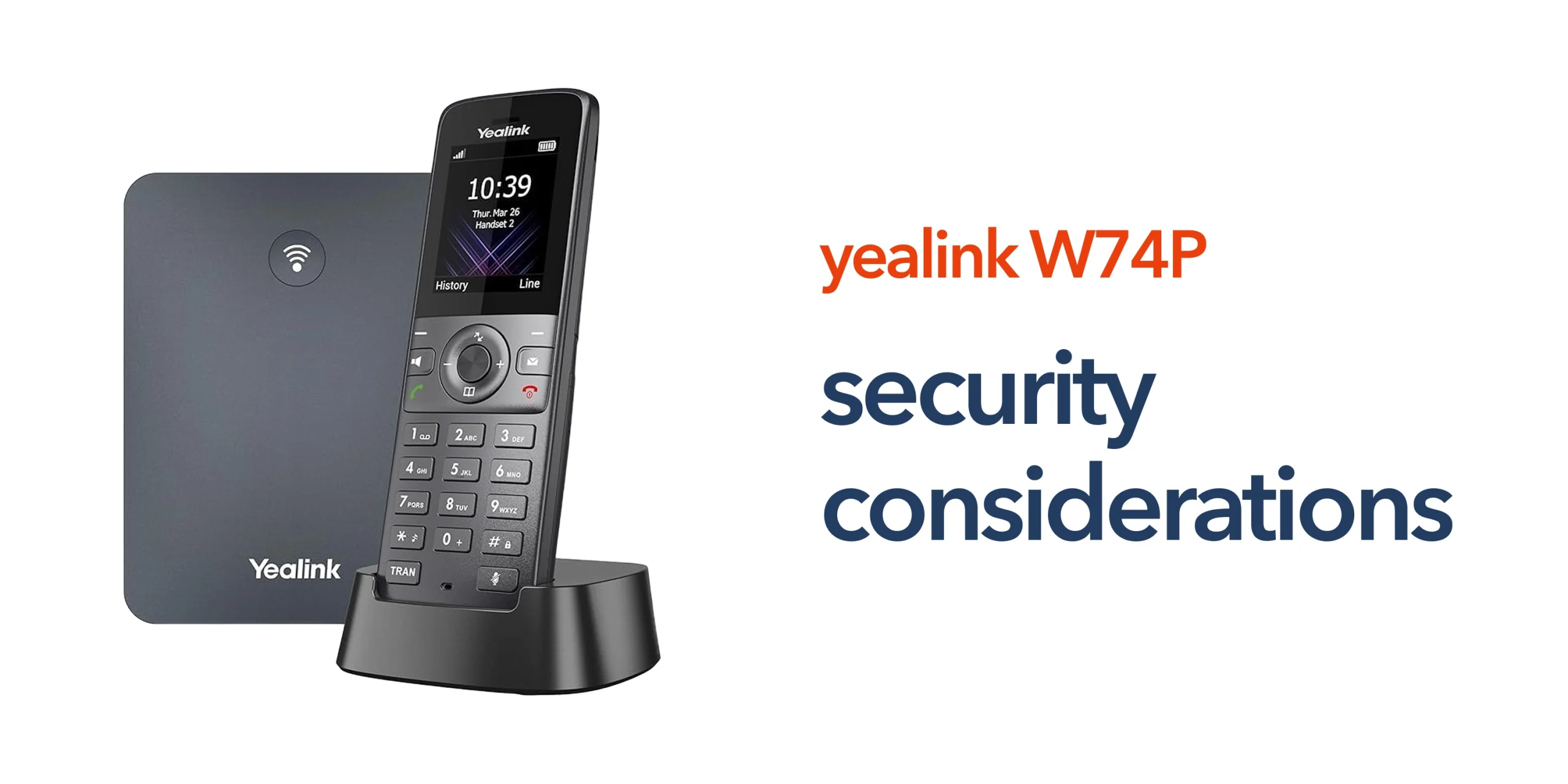
Many UK businesses are moving away from legacy infrastructure such as PSTN and the public switched telephone network as part of the wider shift to cloud telephony. Wireless VoIP phones, including solutions like the Yealink W74P, are now widely used across offices, retail environments, and multi-site organisations. This transition reflects how modern businesses operate. Teams are no longer tied to desks and need to stay connected while moving around the workplace. Wireless VoIP technology supports this by combining mobility with the capabilities of a full business phone system, making communication faster and more responsive.
However, this flexibility also changes the security landscape. Wireless communication introduces additional exposure points, with voice data transmitted over networks rather than fixed lines. Devices rely on business internet, SIP authentication, and cloud platforms, meaning any weak configuration can create vulnerabilities. Without proper VoIP wireless security, businesses risk unauthorised access, call misuse, and exposure of sensitive information. For many organisations, this is not just a technical issue but a risk to customer trust and day-to-day operations.
A secure setup ensures your communication system remains reliable, private, and ready to support modern working. Understanding these risks is the first step towards building a business telecoms environment that is both flexible and protected.
What Makes Wireless VoIP Security Different?
Traditional desk phones operate on fixed connections. Wireless VoIP phones rely on a combination of technologies, including WiFi or DECT and cloud telephony platforms. This creates multiple layers where security must be considered:
Wireless Transmission Risks
Wireless VoIP phones transmit voice data over the air rather than through fixed cabling, which introduces potential interception risks if not properly secured. Technologies such as DECT are designed with built-in encryption and are generally more secure than standard WiFi. However, poor setup, outdated firmware, or incorrect base station configuration can still create vulnerabilities. Ensuring encryption is enabled and devices are deployed correctly is essential to maintaining secure voice communication.
Network-Level Exposure
VoIP systems depend heavily on your business’s internet connection and internal network infrastructure. If your network is not properly secured, it can become an entry point for attacks or unauthorised access. Weak firewalls, lack of network segmentation, and unreliable business broadband can all impact both security and call quality. Separating voice traffic from general data usage and maintaining a stable, well-configured network helps protect your communication environment.
Device and Authentication Risks
Each VoIP handset connects to the system using SIP credentials, which act as the gateway to your business phone system. If these credentials are weak, reused, or left as default, they can be exploited. This can lead to unauthorised device registration, fraudulent calls, or system misuse. Strong passwords, unique credentials for each device, and controlled user access are key to reducing this risk.
Cloud Platform Dependencies
Wireless VoIP phones are typically connected to cloud telephony platforms, which manage call routing, voicemail, and system configuration. If these platforms are not properly secured or are misconfigured, it can affect the entire organisation. Access control, secure provisioning, and regular monitoring are important to ensure the platform remains protected. Choosing a reliable provider and maintaining correct settings helps ensure your business phone system remains secure and stable.
Key Security Considerations for Wireless VoIP Phones
To protect your communications, VoIP wireless security should be approached in a structured way.
Secure Voice Encryption
Encryption ensures that voice data cannot be easily intercepted. Modern VoIP phone systems use secure protocols to protect calls between devices and the cloud platform. For businesses handling sensitive information, such as accountants or healthcare providers, this is essential.
Strong SIP Authentication
Each device should have unique credentials. Avoid default usernames and weak passwords. Strong authentication prevents unauthorised users from registering devices or making calls through your system.
Network Security and Segmentation
Your VoIP system should not sit on an open network. Separating voice traffic from general data traffic improves both performance and security. This is particularly important in environments like retail, where public WiFi may also be in use.
Regular Firmware Updates
Devices like the Yealink W74P receive firmware updates to address vulnerabilities and improve stability. Keeping systems updated ensures you are protected against known threats.
Controlled Access and Device Management
Limit who can configure or access your VoIP system. Centralised management through cloud telephony platforms allows administrators to control permissions, monitor usage, and quickly respond to issues.
Applying VoIP Wireless Security in Real Business Environments
Wireless phones allow staff to move freely across shop floors. Without proper security, shared networks can become a risk. A secure setup ensures customer data and transactions remain protected. Businesses such as accountants rely on confidential conversations. Encryption and authentication are critical to maintaining trust and compliance. For organisations operating across multiple locations, consistent VoIP wireless security ensures all sites follow the same standards. This reduces risk and simplifies management.
Aligning Security with Modern Telecoms
The UK telecom landscape is changing rapidly. With the move away from the public switched telephone network, businesses are being pushed towards VoIP and cloud telephony solutions that support modern working. Security should not be treated as an add-on. It needs to be built into your system from the start to ensure long-term reliability and protection. A well-designed VoIP environment brings together several key elements:
- Secure devices that are correctly configured and regularly updated.
- Reliable business internet that supports stable and consistent voice traffic.
- Proper network configuration, including segmentation and firewall protection.
- Trusted cloud platforms with strong access control and monitoring.
When these components work together, businesses benefit from a communication system that is not only flexible and scalable but also secure and resilient enough for day-to-day operations.
Building a Secure and Reliable VoIP Environment
VoIP wireless security is not about adding complexity. It is about putting the right foundations in place from the start. Working with an experienced telecom provider ensures devices are configured correctly, networks are optimised for voice traffic and security settings are applied consistently. This ensures that systems are easy to manage as your business grows. circle.cloud helps UK businesses deploy secure, cloud-first communication systems that are simple to use and built for modern working. If you are planning to upgrade your business phone system or move away from PSTN, now is the time to ensure your setup is both flexible and secure.
FAQs:
What is VoIP wireless security?
VoIP wireless security refers to the measures used to protect voice communication over wireless networks, including encryption, authentication, and secure network configuration.
Are DECT phones like the Yealink W74P secure?
Yes. DECT technology is designed with built-in security features. However, correct configuration, firmware updates, and network security are still essential.
Can VoIP calls be intercepted?
Without proper security, it is possible. Encryption and secure protocols significantly reduce this risk.
How does business broadband affect VoIP security?
Reliable business broadband ensures stable connections and reduces exposure to network vulnerabilities. Poor connectivity can increase risk and affect call quality.
Do small businesses need VoIP wireless security?
Yes. Security is not just for large enterprises. SMEs are often targeted due to weaker systems, making proper setup essential.