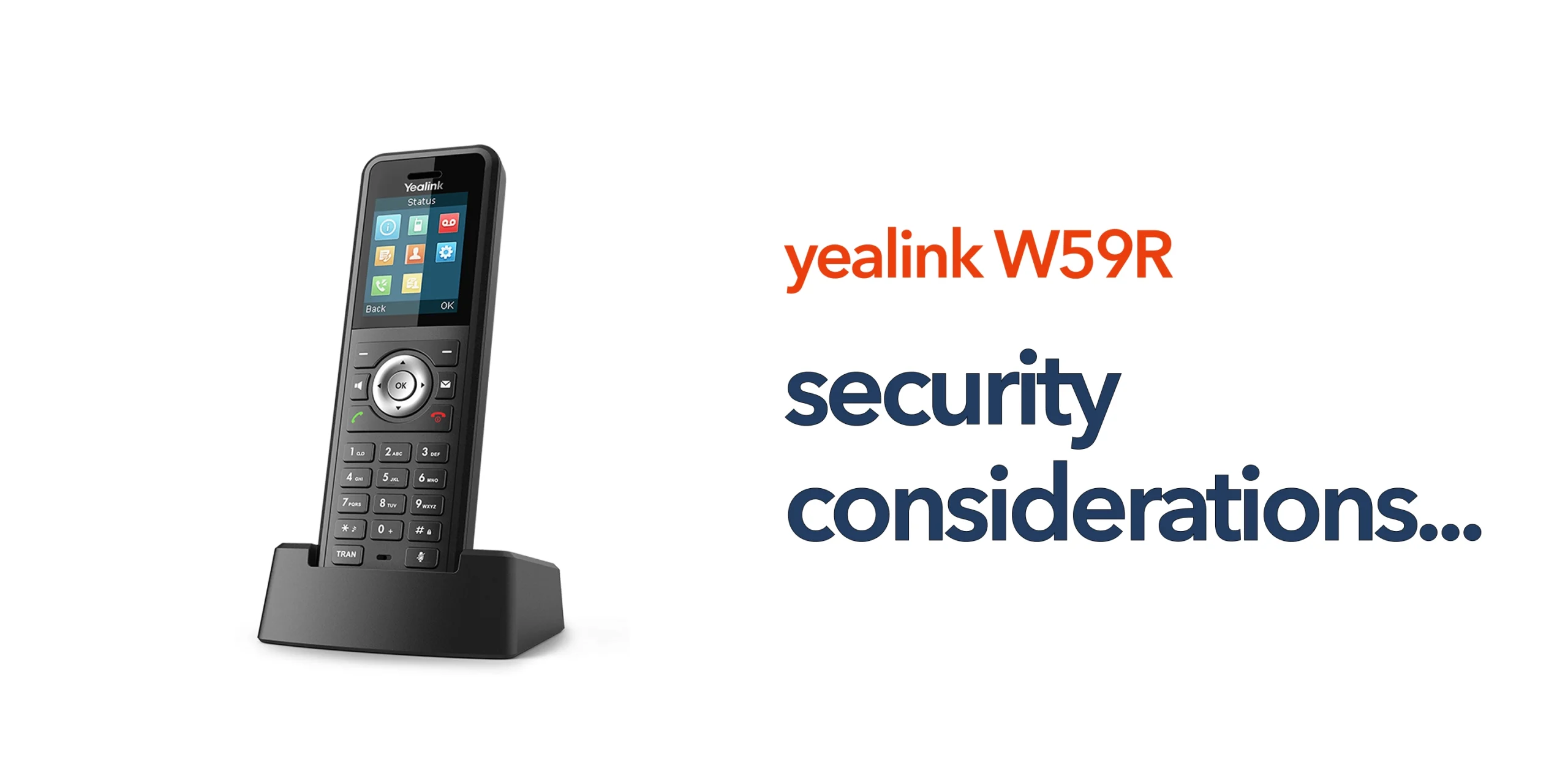
When reviewing security considerations for DECT handsets, many businesses assume wireless devices are secure by default. In reality, any communication system connected to your network can introduce risks if it is not properly configured, monitored, and maintained. Even small oversights can create vulnerabilities that affect both communication and wider business operations.
For organisations using devices such as the Yealink W59R, security goes beyond protecting voice calls. It plays a key role in safeguarding sensitive business data, preventing unauthorised access, and ensuring consistent system availability. In environments where communication is critical, any security issue can quickly lead to disruption, downtime, or compliance concerns.
Taking a proactive approach to security considerations for DECT handsets means looking at the full picture. This includes the handset itself, the base station, your VoIP platform, and the underlying network. When these elements are properly secured and managed, businesses can maintain reliable, secure communication without adding unnecessary complexity.
How DECT Handset Security Works
DECT technology is designed with built-in protections, making it a secure option for business communication when deployed correctly. Understanding how these features work helps businesses take a more informed approach to security considerations for DECT handsets.
- Encrypted Voice Communication: DECT handsets use encryption to protect voice data between the handset and base station. This helps prevent interception and ensures that business conversations remain private and secure during transmission.
- Secure Authentication Between Devices: Before a handset connects to a base station, it must be authenticated. This process ensures that only authorised devices can access the system, reducing the risk of unauthorised use or intrusion.
- Isolated Communication Channels: Unlike Wi-Fi, DECT operates on dedicated frequency bands. This limits exposure to common network-based attacks and reduces interference from other wireless devices, creating a more stable and controlled communication environment.
Key Security Risks Businesses Should Consider
While DECT technology is secure by design, risks can still arise if systems are not configured or maintained correctly. Addressing these areas is a key part of managing security considerations for DECT handsets in any business environment.
Weak or Default Credentials
Using default login details for base stations or VoIP platforms creates an easy entry point for attackers. These credentials are widely known and often targeted first. Businesses should always replace default logins with strong, unique passwords and manage them securely to reduce the risk of unauthorised access.
Unsecured Network Infrastructure
DECT handsets depend on your wider network and VoIP system. If your broadband connection, router, or internal network is not properly secured, it can expose your entire communication setup to threats. A secure network foundation is essential to protect both voice traffic and system access.
Outdated Firmware
Running outdated firmware can leave devices exposed to known vulnerabilities. Manufacturers release updates to fix security issues and improve stability, but these are only effective if applied. Regularly updating firmware ensures your devices remain protected against emerging threats.
Poor Access Control
Allowing unrestricted access to handset registration or system settings increases the risk of misuse or unauthorised changes. Access should be limited to authorised users only, with clear controls in place to manage permissions and monitor system activity.
Lack of Encryption Configuration
While DECT supports encryption, it is not always enforced by default in every deployment. If encryption is disabled or misconfigured, voice data may be exposed. Businesses should ensure encryption is enabled and properly configured across all devices.
Unauthorised Handset Registration
If handset registration is left open or unsecured, unauthorised devices could connect to your system. This can lead to misuse, eavesdropping risks, or unauthorised calls. Registration should be restricted and monitored closely.
Physical Security of Devices
DECT handsets are mobile by design, which means they can be lost, stolen, or accessed by unauthorised individuals. Without proper controls, this can expose sensitive information or allow system access. Device locking and user policies help reduce this risk.
VoIP Platform Vulnerabilities
DECT handsets are only one part of the system. If the connected VoIP platform is not secure, it can expose call data, user accounts, and system access. Security should be considered across the entire telecom infrastructure, not just the handset.
Lack of Monitoring and Maintenance
Without regular monitoring, suspicious activity or potential vulnerabilities can go unnoticed. Ongoing maintenance, updates, and system checks are essential to keep your communication environment secure over time.
Practical Steps to Secure Your DECT Handsets
Taking a proactive approach to security considerations for DECT handsets helps prevent issues before they impact your business. These steps ensure your communication system remains secure, reliable, and easy to manage.
- Use Strong Authentication: Ensure all devices, base stations, and VoIP platforms use strong, unique passwords. Avoid default credentials and apply secure access policies. Where possible, use additional authentication for admin access.
- Enable and Verify Encryption: DECT systems support encrypted communication, but this should be confirmed during setup. Proper encryption protects voice data and reduces the risk of interception.
- Keep Firmware Updated: Regular firmware updates protect against known vulnerabilities and improve system stability. Set a routine to check and apply updates consistently.
- Secure Your VoIP and Network Environment: Your DECT system relies on your wider network. Use firewalls, secure routers, and monitored connections to protect against external threats.
- Control Device Registration: Restrict which devices can connect to your system. Disable unused handsets and regularly review active devices to prevent unauthorised access.
- Implement Access Control Policies: Limit access to system settings and configuration tools to authorised users only. Clear roles and permissions reduce the risk of misuse.
- Protect Physical Devices: DECT handsets are mobile and can be lost or accessed by others. Use device locking, staff awareness, and reporting procedures to minimise risk.
- Monitor and Maintain Your System: Regular monitoring helps identify unusual activity early. Ongoing maintenance ensures your system remains secure as your business evolves.
- Work with a Managed Telecom Provider: Many security risks come from misconfiguration. An experienced provider ensures your system is set up correctly and maintained as part of your wider telecom infrastructure.
The Role of Cloud Telephony in Security
Modern cloud-based phone systems strengthen security considerations for DECT handsets by adding protection beyond the device itself. They offer centralised management, secure remote access for authorised users, and automated updates to reduce vulnerabilities. By reducing reliance on on-site hardware, cloud telephony helps limit risk and keeps systems easier to manage. This supports a cloud-first approach, allowing businesses to maintain strong security without added complexity.
Is the Yealink W59R a Secure Option?
The Yealink W59R is designed with business security in mind and provides a strong foundation for secure communication when deployed correctly. It supports encrypted voice communication, secure device authentication, and reliable DECT connectivity with reduced exposure to interference. It is also compatible with modern VoIP and cloud telephony platforms, allowing businesses to implement secure, scalable communication systems.
However, like any device, its overall security depends on how it is configured and managed within your wider telecom environment. Proper setup, regular updates, and a secure network infrastructure are essential to ensure the system remains protected and performs reliably.
Final Thought
Security should be built into your communication system, not added as an afterthought. Devices like the Yealink W59R provide a strong foundation, but real protection comes from proper setup and ongoing management. If you want to ensure your business communications are secure, reliable, and ready for modern work, speak to circle.cloud. We help UK businesses implement secure, cloud-based telecom systems that are simple to manage and built to perform.
FAQs
Are DECT handsets more secure than Wi-Fi phones?
In many cases, yes. DECT uses dedicated frequencies and built-in encryption, which reduces exposure to common Wi-Fi vulnerabilities.
Can DECT calls be intercepted?
Modern DECT systems use encryption, making interception extremely difficult when configured correctly.
How often should firmware be updated?
Firmware should be checked regularly and updated as soon as new versions are available to address security vulnerabilities.
Do I need additional security for VoIP systems?
Yes. Network security, strong authentication, and proper configuration are essential to protect your entire communication system.