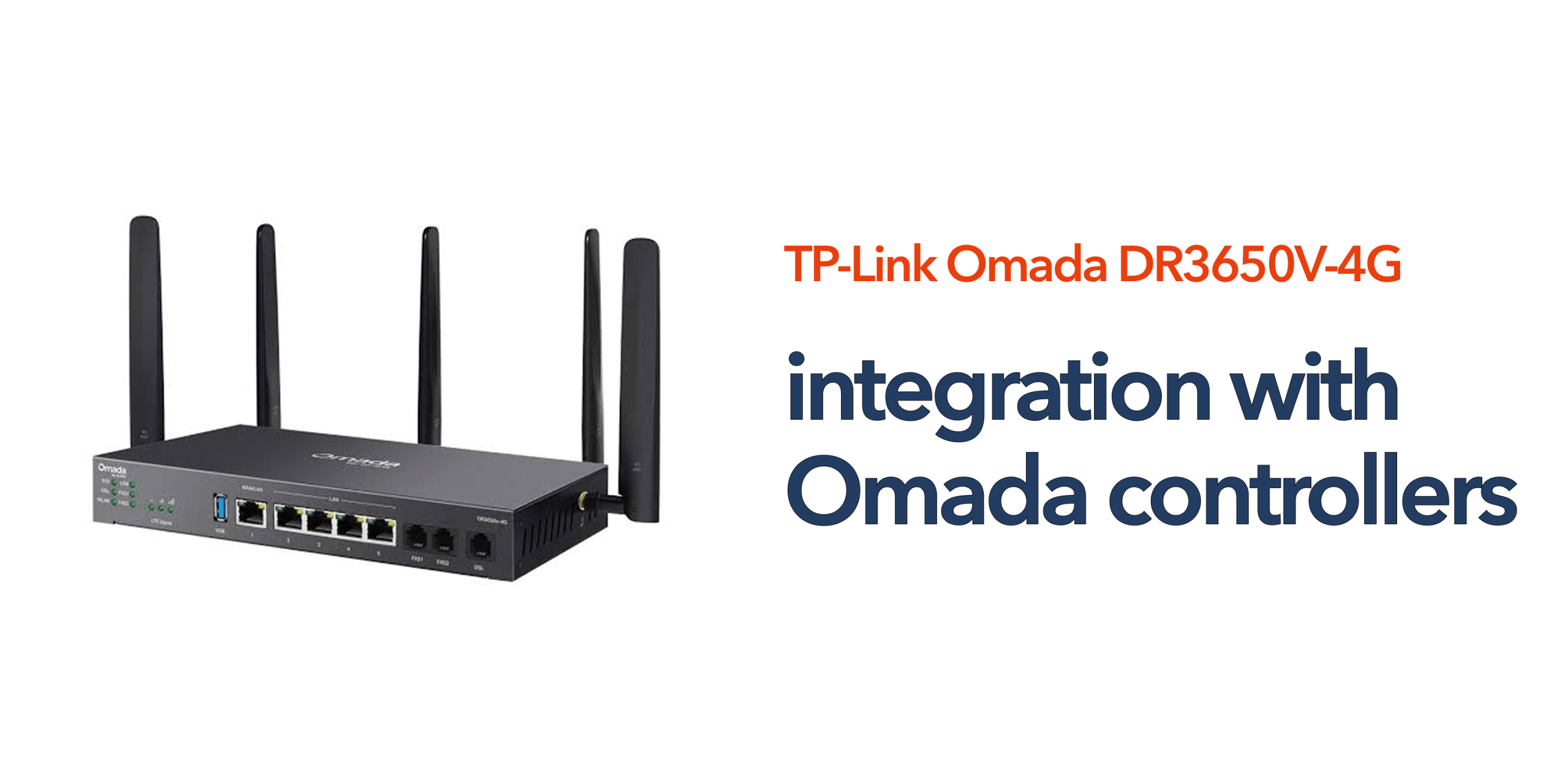
Modern businesses depend on reliable internet connectivity to support cloud applications, VoIP phone systems, video conferencing, and remote working. As networks become more complex, managing routers, switches, and wireless access points individually can quickly become time-consuming. The TP-Link Omada DR3650V-4G is designed to address this challenge by combining business-grade connectivity with integration into the Omada Software Defined Networking (SDN) platform. This allows organisations to centralise network management, improve visibility, and simplify administration across multiple sites. Understanding DR3650V-4G Integration with Omada Controllers can help businesses build a more efficient, scalable, and resilient network infrastructure.
What Is the TP-Link Omada DR3650V-4G?
The TP-Link Omada DR3650V-4G is a business router that combines broadband connectivity with built-in 4G LTE failover. The device is designed to keep organisations connected even when primary internet services experience outages. If the main broadband connection fails, the router can automatically switch to a 4G network, helping maintain business continuity and minimise disruption.
When integrated into the Omada ecosystem, the router becomes part of a centrally managed network environment that provides enhanced visibility and control.
What Are Omada Controllers?
Omada Controllers are the central management platform within TP-Link’s Omada SDN solution. Rather than managing each networking device separately, administrators can monitor and configure routers, switches, and wireless access points from a single dashboard. Omada Controllers are available in several deployment options:
- Hardware Controller
- Software Controller
- Cloud-Based Controller
Each option delivers the same centralised management experience while offering flexibility to suit different business requirements.
How Does DR3650V-4G Integration Work?
The integration process involves adopting the DR3650V-4G into an Omada Controller environment. Once connected and adopted, the router communicates with the controller and becomes visible within the central management platform. Administrators can then:
- Monitor connectivity status
- View network performance metrics
- Configure router settings remotely
- Manage WAN connections
- Monitor failover events
- Apply network-wide policies
This centralised approach eliminates the need to access each device individually, significantly simplifying network administration.
Benefits of DR3650V-4G Integration
Integrating the DR3650V-4G with Omada Controllers delivers more than simple connectivity management. It provides greater visibility, streamlined administration, and improved network resilience, helping businesses operate more efficiently while reducing the complexity of managing modern network infrastructure.
Centralised Network Management
One of the biggest advantages of DR3650V-4G Integration with an Omada Controller is the ability to manage the entire network from a single interface. Instead of logging into multiple management portals, IT teams can view and control routers, switches, and access points through one central dashboard. This streamlined approach improves operational efficiency, simplifies administration, and reduces the time required to manage network infrastructure.
Improved Visibility
Modern businesses require clear visibility into network performance to maintain productivity and minimise disruptions. Through Omada integration, administrators can monitor WAN utilisation, connection status, device health, network traffic, client activity, and security events in real time. Having immediate access to this information makes troubleshooting faster and allows IT teams to identify potential issues before they affect users.
Simplified Remote Management
Many organisations now operate across multiple locations or support hybrid and remote working environments. DR3650V-4G Integration allows administrators to manage devices remotely without the need for on-site visits. This is particularly beneficial for multi-site businesses, retail chains, managed service providers, educational institutions, and healthcare organisations. Remote management improves responsiveness, reduces support costs, and enables more efficient network administration.
Consistent Network Policies
Maintaining consistent network settings across several locations can become increasingly difficult as businesses grow. Omada Controllers help solve this challenge by allowing administrators to apply standardised configurations across all connected devices. This ensures consistent security settings, uniform network policies, simplified compliance management, and fewer configuration errors. As organisations expand, maintaining this level of consistency becomes essential for both security and operational efficiency.
Enhanced Business Continuity
The TP-Link Omada DR3650V-4G includes integrated 4G failover, helping businesses stay connected during broadband outages. When combined with Omada Controller monitoring, administrators can quickly identify connectivity issues and take appropriate action. This proactive approach helps minimise downtime, maintain productivity, and ensure critical business services remain accessible when primary internet connections fail.
Monitoring WAN and 4G Failover Through Omada
One of the most valuable aspects of DR3650V-4G Integration is the visibility it provides into internet connectivity and network performance. Through the Omada dashboard, administrators can monitor:
Primary WAN Status The Omada Controller continuously displays the health and performance of the primary broadband connection. This allows IT teams to monitor connection stability, identify performance issues, and respond quickly before users experience service disruptions.
Failover Events When the router automatically switches to its 4G backup connection, the event is recorded and displayed within the controller. This gives administrators valuable insight into network reliability, helping them understand how frequently outages occur and how effectively failover protection is performing.
Traffic Analysis Administrators can review network traffic patterns and identify devices or applications consuming significant bandwidth. These insights help optimise network performance, improve resource allocation, and support future capacity planning as business requirements evolve.
Ideal Use Cases for DR3650V-4G Integration
The flexibility and centralised management capabilities offered by DR3650V-4G Integration make it suitable for a wide range of business environments. From growing SMEs to organisations with multiple locations, the solution helps simplify network operations while maintaining reliable connectivity and performance.
Small and Medium-Sized Businesses Small and medium-sized businesses can benefit from enterprise-level visibility and centralised management without the complexity and expense associated with larger networking platforms. DR3650V-4G Integration provides a practical way to simplify network administration while maintaining reliability.
Multi-Site Organisations Businesses operating from multiple locations can manage all sites through a single interface. This centralised approach improves oversight, simplifies troubleshooting, and ensures consistent network policies across every location.
Retail and Hospitality Customer-facing organisations depend heavily on reliable connectivity for payment systems, guest services, and day-to-day operations. DR3650V-4G Integration helps deliver dependable connectivity while making network management easier and more efficient.
Managed Service Providers Managed Service Providers (MSPs) can remotely monitor and manage customer networks through Omada Controllers. This improves operational efficiency, speeds up issue resolution, and enables proactive support across multiple client environments.
Remote and Hybrid Work Environments Organisations supporting remote and hybrid workers require reliable connectivity and visibility across distributed networks. DR3650V-4G Integration helps maintain control over network performance while supporting modern working practices and cloud-based applications.
Why Centralised Management Matters
As businesses continue to adopt cloud-first communications, network infrastructure plays a critical role in day-to-day operations. Cloud phone systems, video conferencing platforms, CRM systems, and productivity tools all depend on stable and secure connectivity. Managing these networks manually becomes increasingly difficult as organisations expand. DR3650V-4G Integration with Omada Controllers provides a practical solution by bringing management, monitoring, and reporting into a single platform. This reduces complexity while helping businesses maintain reliable connectivity and strong network performance.
Conclusion
The TP-Link Omada DR3650V-4G offers much more than internet connectivity and 4G failover. When combined with Omada Controllers, it becomes part of a fully integrated Software Defined Networking environment that simplifies management and improves visibility for businesses looking to build a scalable, reliable, and easy-to-manage network. DR3650V-4G Integration delivers centralised control, proactive monitoring, and improved operational efficiency. As network demands continue to grow, integrating the TP-Link Omada DR3650V-4G into the Omada ecosystem provides a future-ready foundation for modern business communications.
Speak to circle.cloud for expert guidance on network design, Omada deployment, and resilient business connectivity.
FAQs
Does the DR3650V-4G support Omada SDN? Yes. The router is designed to integrate with the Omada SDN platform, allowing centralised management through Omada Controllers.
Can I manage multiple DR3650V-4G routers from one controller? Yes. Omada Controllers can manage multiple supported devices across different locations from a single dashboard.
Does Omada integration improve network reliability? The integration itself does not increase uptime, but it provides better visibility and monitoring that help administrators identify and resolve issues more quickly.
Can I monitor 4G failover events through Omada? Yes. The controller can display connectivity status and provide visibility into failover activity.
Is DR3650V-4G Integration suitable for small businesses? Absolutely. Small businesses can benefit from simplified management, remote access, and improved network visibility without enterprise-level complexity.