Many traditional business phone systems were designed for fixed desk environments. While they still work in standard offices, they often struggle to support modern workplaces where employees move between departments, floors, or locations. Retail staff spend most of their time on the shop floor, warehouse teams coordinate operations across large facilities, and hospitality or healthcare professionals rarely remain at a desk for long.
This is where Yealink W76P use cases become particularly valuable. The device combines wireless DECT technology with VoIP connectivity, allowing businesses to deploy communication systems that support mobility across the workplace. Instead of relying on desk-bound phones, employees can stay connected while moving throughout the building, helping teams respond to calls quickly and maintain consistent communication with colleagues and customers.
Understanding the Yealink W76P DECT Phone System
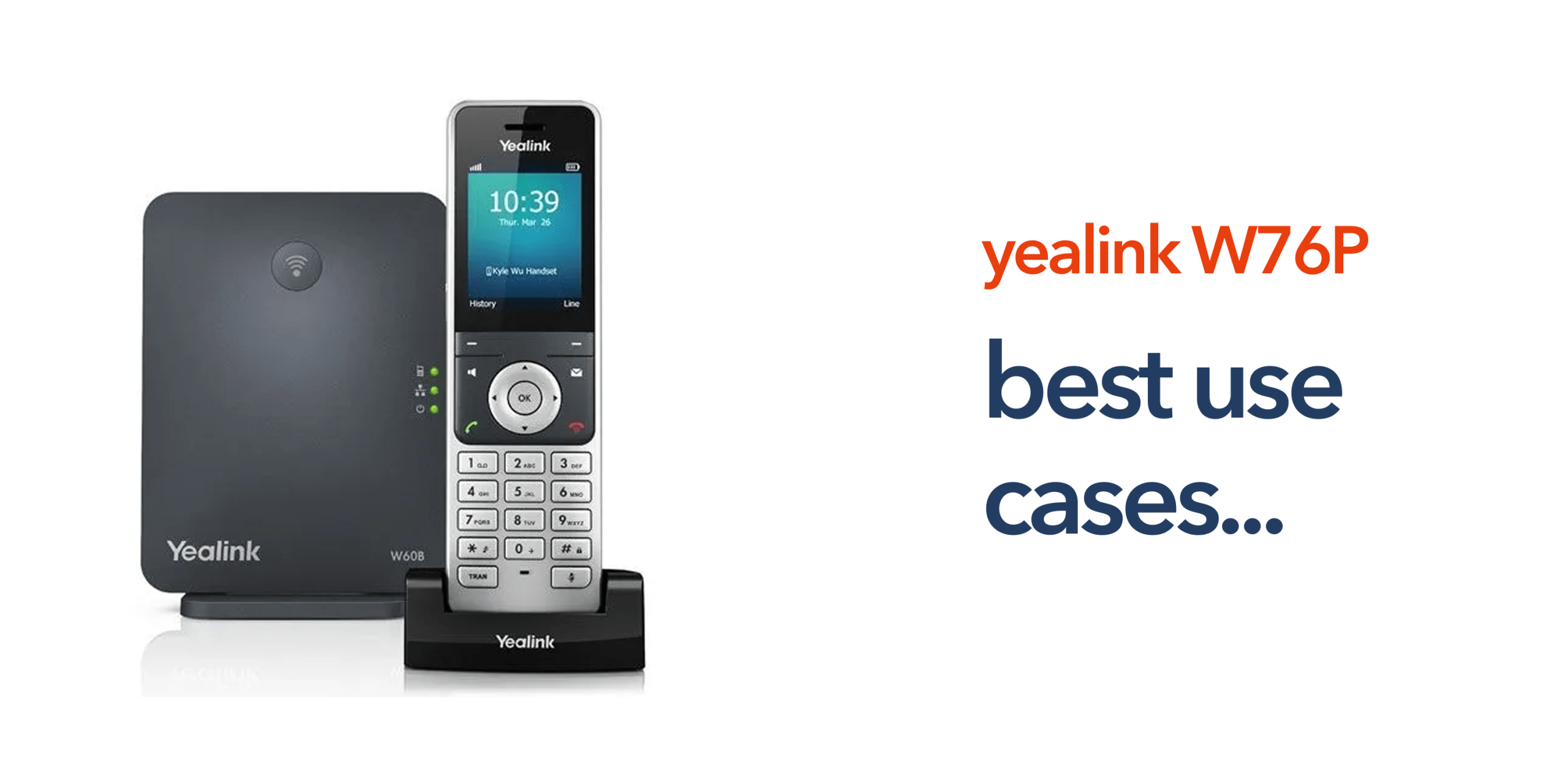
Before exploring specific Yealink W76P use cases, it helps to understand how the system works. The device is a DECT wireless VoIP phone system. It includes a base station connected to the business network and wireless handsets that communicate with the base using Digital Enhanced Cordless Telecommunications technology.
The base station connects to a VoIP phone system or cloud telephony platform, allowing calls to travel through internet-based communications rather than traditional PSTN lines. This architecture combines wireless workplace mobility, VoIP calling, and cloud communication integration. The result is a business phone system that supports both flexibility and reliability.
Use Cases for Yealink W76P
The use cases for Yealink W76P span a range of business environments where mobility and reliable communication are essential. Because the system combines DECT wireless technology with VoIP connectivity, it supports teams that need to stay reachable while moving around the workplace. This makes it suitable for organisations that require flexible communication without relying on fixed desk phones.
Small Offices That Need Simple Telecom Infrastructure
One of the most common Yealink W76P use cases is in small office environments. Many SMEs want a professional business phone system but do not want the complexity of installing desk phones at every workstation. The W76P DECT system allows several wireless handsets to connect to a single base station, creating a flexible communication setup without extensive cabling.
This approach provides several advantages for small businesses, including simplified installation, reduced cabling requirements, flexible handset placement, and the ability to adjust office layouts without relocating fixed desk phones. For smaller teams, it delivers the functionality of a full business phone system while keeping the infrastructure simple and easy to manage.
Retail Environments Where Staff Are Mobile
Retail businesses rarely operate from desks. Staff typically move between the shop floor, stock rooms, and customer service areas throughout the day. Traditional desk phones can create communication gaps because employees cannot easily answer calls when they are away from the counter.
This is one of the most practical Yealink W76P use cases. The wireless DECT handset allows staff to stay reachable while moving around the store, ensuring customer enquiries and supplier calls are not missed.
With wireless handsets, retail teams can answer customer calls from anywhere in the shop, transfer calls quickly between colleagues, and respond to supplier enquiries without returning to a fixed phone. This flexibility helps improve responsiveness while maintaining consistent customer service.
Warehouses and Logistics Facilities
Operational environments often require teams to coordinate activities across large physical spaces. Warehouse staff, logistics managers, and supervisors frequently move between storage areas, loading bays, and office locations throughout the day.
A wireless DECT phone system allows teams to remain reachable without relying on fixed desk phones. This mobility is one of the practical Yealink W76P use cases in logistics environments where communication needs to move with the workforce.
With wireless handsets, teams can maintain operational coordination, communicate internally across departments, speak with suppliers, and respond quickly to delivery enquiries. Reliable communication helps reduce delays, improve coordination, and support smoother day-to-day operations across warehouse and logistics facilities.
Hospitality and Healthcare Settings
Another important group of Yealink W76P use cases is found in hospitality and healthcare environments. In these sectors, employees often move between rooms, floors, or departments while still needing to answer incoming calls and coordinate with colleagues.
Examples include reception teams, managers, healthcare administrators, and care facility staff who need to remain reachable throughout the day. A wireless DECT phone allows staff to carry the handset with them while continuing their work.
This mobility helps teams stay accessible without interrupting daily operations. As a result, important calls from guests, patients, suppliers, or partners can be handled quickly, helping organisations maintain reliable service and communication.
Hybrid and Remote Working Environments
Modern workplaces increasingly support hybrid working models where employees move between office locations, satellite spaces, or shared work environments. Communication systems, therefore, need to remain consistent regardless of where teams are based.
This is another practical area where Yealink W76P use cases apply. The device integrates with VoIP phone systems and cloud telephony platforms, allowing businesses to deploy communication tools that work across multiple locations.
For organisations adopting flexible working models, the system can support environments such as satellite offices, shared workspaces, temporary team locations, and other flexible workplace setups. Because the phone system connects to cloud communications infrastructure, businesses can expand or adjust their deployment as their workforce grows or changes.
Reception and Front Desk Teams
Reception teams are responsible for handling incoming calls, greeting visitors, and coordinating internal communication. In many offices, reception staff frequently move between desks, meeting rooms, and visitor areas.
One of the practical Yealink W76P use cases is for reception teams that need to stay reachable while managing multiple tasks. Wireless handsets allow reception staff to answer calls, transfer enquiries to the right departments, and respond quickly, even when away from the desk.
Manufacturing and Production Facilities
Manufacturing environments often require communication across large production areas. Supervisors and operational staff may move between production lines, offices, and warehouse spaces throughout the day. A wireless DECT phone system allows teams to remain reachable while managing operations on the floor. In these settings, Yealink W76P use cases support internal coordination, maintenance communication, and rapid response to operational issues.
Education and Campus Environments
Schools, colleges, and training centres often operate across multiple buildings or floors. Administrative staff, facilities teams, and support staff frequently move around the campus during the day. Wireless business phones allow staff to remain reachable without relying on fixed desk phones in every location. This improves coordination across departments and helps ensure important calls are handled quickly.
Temporary Offices and Project Sites
Some organisations operate in temporary environments such as construction offices, project sites, or short-term team locations. One of the flexible Yealink W76P use cases is deploying communication systems in locations where installing a full desk phone setup would be impractical. Because the system uses a base station and wireless handsets, it can be deployed quickly and adjusted as teams move or projects evolve.
Why DECT Systems Remain Relevant for Modern VoIP Networks
Some organisations assume that wireless phones are outdated compared with desk-based VoIP devices. In reality, DECT technology remains highly relevant. DECT systems provide reliable wireless communication without relying on WiFi networks, which can become congested in busy environments. When integrated with modern VoIP platforms, devices like the Yealink W76P provide:
- Stable voice connectivity
- Secure communication
- Scalable deployment
- Flexible workplace mobility
This combination makes DECT systems an effective solution for many business environments.
Conclusion
The Yealink W76P use cases highlight how wireless VoIP phones can support modern business environments where mobility and flexibility are essential. From small offices and retail stores to warehouses, hospitality venues, and hybrid workplaces, the system allows teams to stay connected without relying on fixed desk phones. By combining DECT wireless mobility with cloud telephony compatibility, the W76P provides a practical communication solution for organisations that need reliable business telecoms across different working environments.
For businesses adopting VoIP phone systems or preparing for the transition away from PSTN infrastructure, devices like the Yealink W76P can play an important role in building a flexible and future-ready communication setup.
FAQs:
What businesses benefit most from the Yealink W76P?
Businesses where employees need mobility benefit most. Examples include retail stores, warehouses, hospitality venues, healthcare facilities, and small offices.
Is the Yealink W76P suitable for VoIP phone systems?
Yes. The device integrates with SIP-based VoIP platforms and cloud telephony systems.
How many handsets can connect to the Yealink W76P?
Multiple wireless handsets can connect to the base station, allowing organisations to deploy communication tools across teams without installing multiple desk phones.
Is a DECT phone system better than a desk phone?
It depends on the workplace. DECT systems work best when employees need mobility, while desk phones are ideal for fixed office roles.