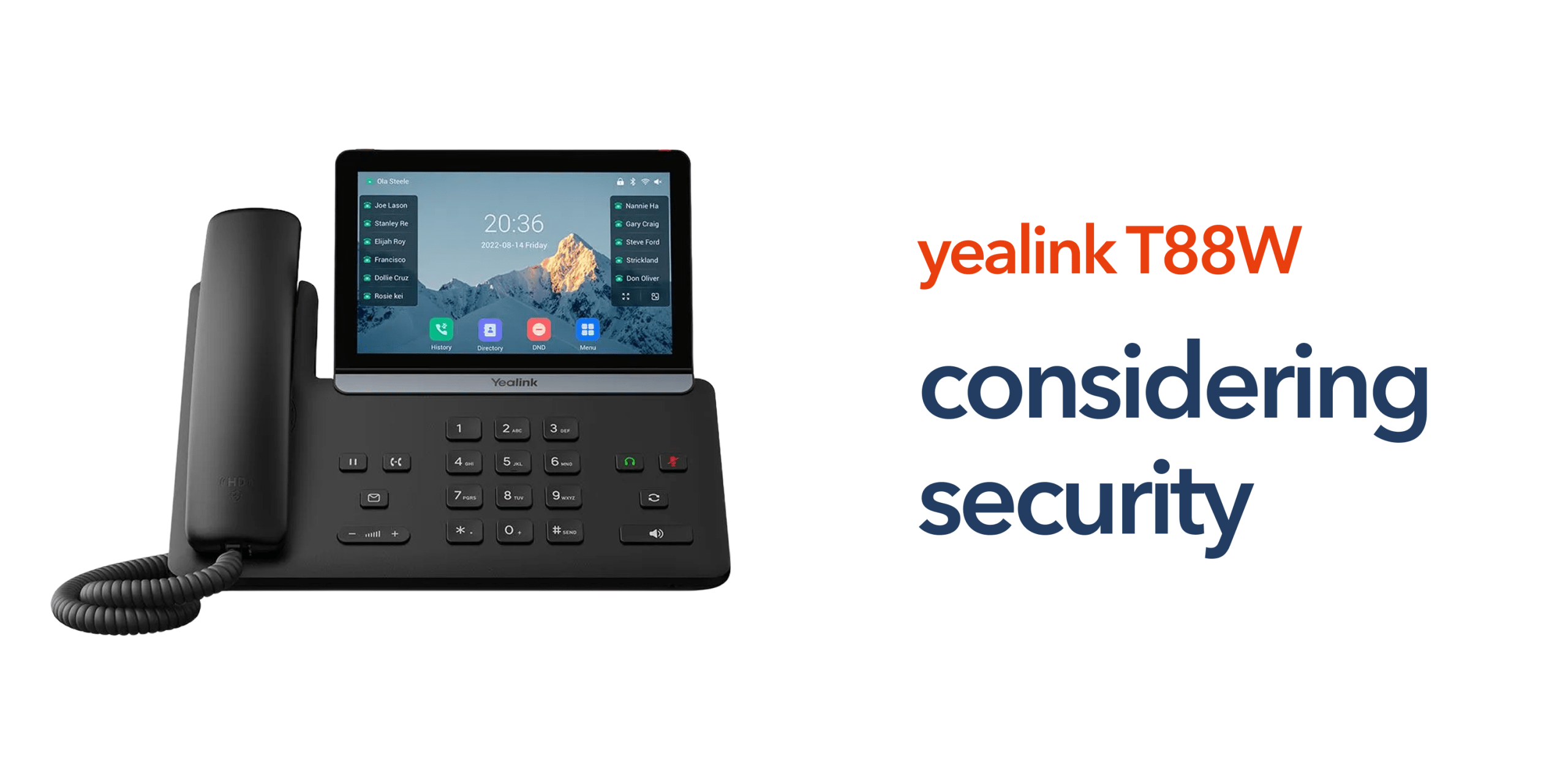
Business communications have changed significantly in recent years. Traditional landlines connected to the public switched telephone network are gradually being replaced by cloud-based communication platforms. Voice over Internet Protocol technology allows organisations to run their phone systems through internet connectivity rather than physical telephone lines. This shift provides greater flexibility, easier scaling, and support for hybrid working environments.
However, as businesses move towards internet-based communications, VoIP phone security becomes an essential consideration. Just like computers and networks, VoIP phones can become vulnerable if they are not configured and managed properly. Devices such as the Yealink SIP T88W Pro offer advanced functionality and strong reliability, but organisations still need to ensure their systems are protected against potential threats.
Understanding the key risks and security practices helps businesses maintain reliable communications while protecting their telecom infrastructure.
Understanding VoIP Security Risks
VoIP technology transmits voice data over business internet connections rather than traditional phone lines. Because calls travel across IP networks instead of the public switched telephone network, poorly configured systems can introduce certain security risks. Understanding these risks is an important part of maintaining strong VoIP phone security in modern business telecom environments. Common VoIP security risks include:
Unauthorised Access
Weak passwords or incorrectly configured SIP accounts can allow attackers to gain access to a phone system. Once inside, they may be able to place calls through the system, change configurations, or monitor communications. Strong authentication controls are essential to prevent unauthorised access.
Toll Fraud
One of the most common VoIP threats is toll fraud. In this scenario, attackers use compromised systems to make expensive international calls. Without proper VoIP phone security controls, these calls may not be detected until large charges appear on the telecom bill.
Call Interception
If voice traffic is not encrypted, it may be possible for attackers to intercept call data while it travels across a network. Encryption protocols help protect sensitive conversations and ensure voice traffic cannot easily be accessed by unauthorised parties.
SIP Registration Hijacking
Another potential risk involves attackers attempting to take control of SIP registrations. If a malicious actor successfully registers their device using stolen SIP credentials, they can redirect calls or place calls through the compromised account. This type of attack can disrupt normal business communications and may also be used for toll fraud or call interception. Strong authentication, secure password policies, and IP access restrictions can help prevent unauthorised SIP registrations.
Network Attacks
VoIP phones depend on stable internet connectivity. If the network infrastructure is targeted by denial-of-service attacks or other disruptions, call quality and reliability may be affected. Secure network configuration and monitoring help reduce these risks. These threats highlight why VoIP phone security must be considered alongside the wider business telecom infrastructure, including network design, internet connectivity, and system configuration.
VoIP Phone Vulnerabilities in Desk Phones
VoIP desk phones are highly reliable devices, but like any network-connected hardware, they can have potential vulnerabilities. Examples include:
- Outdated firmware
- Weak authentication credentials
- Unsecured network connections
- Exposed SIP configurations.
Modern devices such as Yealink phones include built-in security features, but organisations must still configure them correctly.
For example, the Yealink SIP T88W Pro supports encrypted communication protocols and secure account authentication. When properly deployed within a secure network, these devices provide reliable communications for professional environments. However, security depends on both the device and the surrounding infrastructure.
Securing VoIP Devices in Business Environments
Effective VoIP phone security relies on multiple layers of protection. Businesses should secure both the VoIP devices themselves and the wider network infrastructure they connect to. When these layers work together, organisations can maintain reliable communications while reducing the risk of unauthorised access or system disruption.
Secure Authentication
Strong authentication is one of the most important elements of VoIP phone security. Businesses should avoid default passwords and ensure every device uses unique SIP credentials. Limiting access to authorised users helps prevent attackers from registering devices or placing calls through the system.
Encryption
Encryption protects voice data while it travels across business networks. Secure protocols ensure that conversations cannot easily be intercepted or altered during transmission. For organisations handling sensitive client or customer discussions, encrypted communications are particularly important.
Firmware Updates
VoIP desk phones rely on firmware to operate securely. Manufacturers regularly release updates that fix vulnerabilities and improve device performance. Keeping VoIP devices up to date ensures businesses benefit from the latest security improvements and stability enhancements.
Network Segmentation
Separating voice traffic from general data traffic can significantly improve both security and call reliability. Many organisations create dedicated voice networks or VLANs so that VoIP communications are isolated from other business systems. This reduces the likelihood that network issues or security threats will affect the phone system.
Firewall and Network Monitoring
Firewalls and network monitoring tools provide an additional layer of protection. These systems help identify suspicious activity such as unusual call traffic or repeated login attempts. Early detection allows businesses to respond quickly and maintain strong VoIP phone security across their communications infrastructure.
The Role of Network Infrastructure
VoIP phones do not operate in isolation. Their security depends heavily on the surrounding infrastructure. Reliable business broadband and properly configured network equipment are essential components of secure communications. Businesses should ensure that:
- Routers and switches are configured securely
- Voice traffic is prioritised for consistent call quality
- Access controls protect telecom infrastructure
- Network monitoring identifies unusual activity.
Organisations moving from PSTN systems to VoIP often overlook the importance of network design. A well-structured network significantly improves both reliability and VoIP phone security.
Best Practices for VoIP Phone Security in the Workplace
Maintaining strong VoIP phone security requires ongoing attention rather than a one-time configuration. Businesses should implement consistent practices that protect their communication systems as networks, devices, and teams evolve.
Restrict Device Access
Only authorised staff should have access to VoIP phone configuration settings. Administrative access should be limited to IT teams or telecom specialists. Restricting access reduces the risk of accidental misconfiguration or unauthorised changes.
Disable Unused Features
Many VoIP desk phones include advanced features that may not be required in every environment. Disabling unused services can reduce the number of potential security entry points within the system.
Monitor Call Activity
Regularly reviewing call logs helps identify unusual activity. Sudden spikes in international calls or unusual call patterns can indicate possible security issues such as toll fraud attempts.
Use Secure Business Networks
VoIP phones should ideally connect to secure business networks rather than open or public Wi-Fi connections. Stable and protected network infrastructure improves both call reliability and VoIP phone security.
Work With Experienced Telecom Providers
Many organisations benefit from working with experienced telecom providers that understand both VoIP infrastructure and network security. Professional support can help ensure devices, networks, and cloud telephony platforms are configured correctly and monitored over time.
Why VoIP Security Matters During the PSTN Switch-Off
The UK telecommunications industry is undergoing a major transition as traditional landline infrastructure is gradually retired. The public switched telephone network is being replaced by internet-based communication technologies such as voice over internet protocol. As businesses move from PSTN systems to modern VoIP phone systems, communication security becomes increasingly important. Traditional landlines operated on dedicated physical infrastructure, which limited many types of cyber threats. VoIP communications, however, operate across internet networks and digital platforms.
This shift means businesses must consider VoIP phone security as part of their wider telecom strategy. Organisations upgrading their business telephone systems should ensure that:
- VoIP devices are securely configured
- SIP credentials are protected
- Network infrastructure is properly managed
- Firmware updates are maintained
- Access controls are in place for telecom systems.
When these measures are implemented correctly, VoIP technology provides reliable and secure communications for modern businesses. For organisations preparing for the PSTN transition, strong VoIP phone security helps ensure their new communication systems remain stable, protected, and ready to support long-term business growth.
Choosing the Right Telecom Partner
Technology alone does not guarantee secure communications. Businesses also need knowledgeable support and properly managed infrastructure. A reliable telecom partner can help organisations deploy VoIP systems securely while maintaining consistent call quality and system reliability. This includes support with secure VoIP phone configuration, network optimisation, firmware management, monitoring and troubleshooting. For many businesses, managed telecom support helps ensure VoIP phone security remains strong as systems evolve.
Secure Communications for Modern Businesses
VoIP technology now sits at the centre of modern business telecoms. As organisations move away from legacy phone systems and the traditional PSTN network, maintaining strong VoIP phone security becomes increasingly important. With secure network design, proper configuration, and reliable support, businesses can confidently deploy VoIP desk phones such as the Yealink SIP T88W Pro. circle.cloud helps UK organisations modernise their communications with secure, cloud-based phone systems that are simple to manage and built to support growing teams.
Frequently Asked Questions
Are VoIP phones secure for business use?
Yes. When properly configured and deployed on secure networks, VoIP phones can provide highly reliable and secure business communications.
What is the biggest VoIP security risk?
Toll fraud is one of the most common threats. Attackers may attempt to use compromised systems to make unauthorised calls.
Do VoIP phones need encryption?
Encryption significantly improves VoIP phone security by protecting voice traffic as it travels across networks.
How can businesses protect their VoIP phone systems?
Best practices include strong authentication, firmware updates, network monitoring, and secure network configuration.