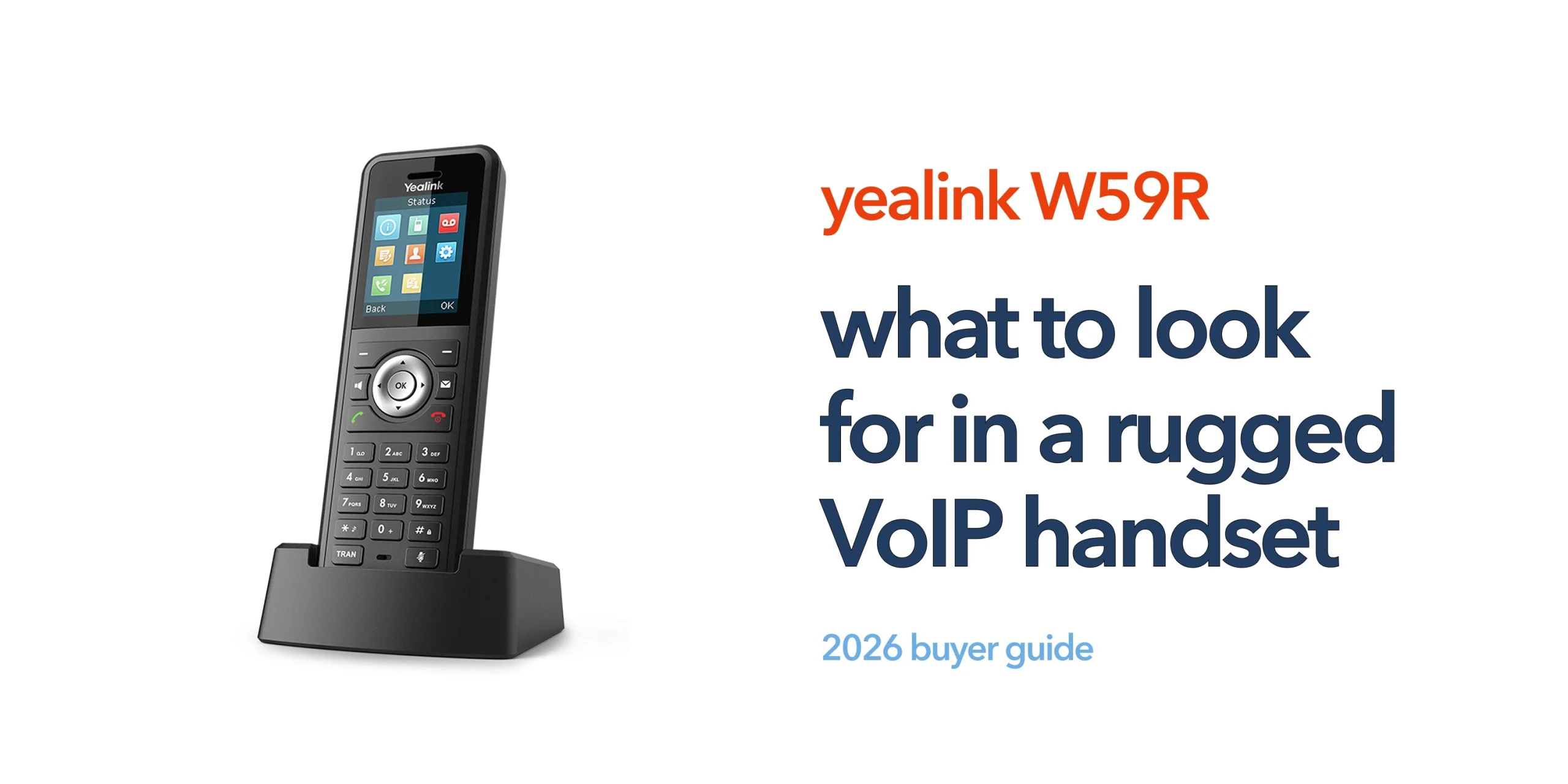
When planning a business communication system, understanding the full cost structure is essential, not just the upfront purchase price. The Yealink W56H is a widely used DECT handset in the UK, known for its reliability and strong integration with VoIP systems, but the overall investment goes beyond the handset itself.
The Yealink W56H price in the UK can vary depending on whether you are buying the handset only, pairing it with a base station, or building a complete multi-user setup. Additional factors such as accessories, DECT infrastructure, and scalability requirements also influence the total cost for businesses.
This guide breaks down the Yealink W56H price in detail and explains what contributes to the overall investment. From core hardware and system components to optional add-ons and expansion options, it helps businesses understand the real cost of deploying a reliable and scalable DECT communication system.
How Much Does the Yealink W56H Cost in the UK?
If you are reviewing DECT handsets for your business, the Yealink W56H is often one of the first options you will come across. It is widely used, reliable, and designed for professional VoIP environments. In the UK market, the Yealink W56H price typically ranges between £60 and £95 per handset (excluding VAT in many cases).
Lower prices are usually tied to bulk orders or trade suppliers, while higher prices may include warranties or faster delivery options. At first glance, that seems straightforward. But the handset cost is only one part of the overall investment.
What You Actually Get for the Price
The Yealink W56H is not a standalone phone. It is an additional DECT handset designed to work with a compatible base station such as the W60B or W56P. For that price, you get:
- Wireless DECT connectivity
- Up to 30 hours of talk time and 400 hours of standby time
- HD voice quality
- 2.4-inch colour display
- Support for business VoIP features like call transfer and conferencing
This makes it suitable for office environments, warehouses, and businesses where mobility matters.
The Hidden Costs Most Buyers Miss
When evaluating the Yealink W56H, many businesses focus only on the handset price and overlook the additional components required to run a complete system. These hidden costs play a major role in the overall investment and can significantly affect your total budget.
1. DECT Base Station
The handset cannot function on its own and requires a DECT base station to operate. This is a mandatory cost in any deployment. In the UK, base stations typically range from around £80 to £150, depending on the model and capacity. Without this component, the Yealink W56H cannot connect to your VoIP or cloud phone system.
2. VoIP or Cloud Phone System
The Yealink W56H depends on a SIP-based VoIP system, which introduces ongoing service costs beyond hardware. These may include monthly per-user licences, call bundles or usage charges, and hosted PBX subscriptions. This layer transforms your setup from simple hardware into a fully managed business communication system.
3. Installation and Setup
Setup costs vary depending on the size and complexity of the deployment. Small installations may require minimal configuration, while larger business setups often involve network optimisation, SIP provisioning, and multi-site configuration. Poor installation can lead to issues such as dropped calls, weak coverage, or unstable performance.
4. DECT Coverage Planning
Coverage planning is often underestimated but is essential for reliable performance. The Yealink W56H typically provides around 50 metres of indoor range and up to 300 metres outdoors. However, larger offices, multi-floor buildings, or warehouses may require additional base stations or DECT repeaters, which increases the overall system cost.
5. Ongoing Support and Maintenance
Long-term costs also depend on the quality of ongoing support. Even affordable hardware can become expensive if maintenance is poor. Businesses should consider firmware updates, technical troubleshooting, replacement units, and the potential cost of downtime. Choosing the right provider is often more important than the initial handset price, as it directly impacts system reliability and performance over time.
Total Cost Example for a Small Business
To give a clearer and more realistic view of the overall investment, here is an example of what a typical small business setup might cost. This helps highlight how the Yealink W56H Price is only one part of the total system cost, not the full picture.
Scenario: 5-user office
- 5 × Yealink W56H handsets: approximately £300–£400
- 1 × DECT base station: approximately £100
- VoIP system: £10–£20 per user/month
- Setup and support: varies depending on provider and complexity
Estimated first-year cost:
Around £1,000 to £2,000, depending on setup, features, and service provider
This breakdown shows why focusing only on the Yealink W56H Price can be misleading. The handset is just one component of a wider communication system, and the total cost depends heavily on infrastructure, licensing, and ongoing service requirements.
Is the Yealink W56H a Good Value for Money?
For most UK businesses, the Yealink W56H offers strong value for money when used as part of a properly designed communication system. It delivers reliable wireless communication, strong battery performance, compatibility with modern VoIP and cloud phone systems, and scalability that supports growing teams.
However, its overall value is not just determined by the handset itself. It depends heavily on how well it is integrated into your wider telecom setup, including your base station, network infrastructure, and VoIP platform. A well-planned system can significantly improve productivity and communication efficiency, while a poorly designed setup can lead to ongoing performance issues regardless of the hardware quality.
When the Yealink W56H Makes Sense
The Yealink W56H is a strong choice for businesses that need reliable, mobile, and scalable voice communication as part of a VoIP or cloud-based setup. It works particularly well in environments where staff need to move freely while staying connected. This handset is ideal for:
- SMEs transitioning to cloud telephony and modern VoIP systems
- Offices that require mobile communication for staff across different rooms or departments
- Warehouses or operational environments where hands-free mobility and coverage are important
- Multi-site businesses looking to standardise communication devices across locations
However, it may be less suitable in certain scenarios, such as:
- Environments that require fully rugged or industrial-grade devices
- Businesses that rely primarily on Wi-Fi-based calling instead of DECT technology
Choosing the Right Setup Matters More Than Price
Many businesses focus on finding the lowest Yealink W56H price in the UK, but the real decision is not about the handset alone. It is about the overall communication system built around it and how well it supports daily operations.
A reliable VoIP setup should be simple to manage, scalable as the business grows, supported by experienced engineers, and designed specifically for the working environment. When these elements are in place, the system delivers consistent performance and long-term value, far beyond the initial hardware cost.
Final Thoughts
The Yealink W56H is a solid, cost-effective DECT handset. But the handset price alone does not reflect the true investment. Understanding the full cost helps you avoid unexpected expenses and ensures your communication system actually supports your business. If you are unsure what your full telecom setup should look like, circle.cloud can help you design a system that fits your business, not just your budget. Speak to our team today.
FAQs
What is the average Yealink W56H price in the UK?
Typically between £60 and £95 per handset, depending on supplier and volume.
Does the Yealink W56H work on its own?
No. It requires a compatible DECT base station and a VoIP system.
Is the Yealink W56H suitable for small businesses?
Yes. It is widely used by SMEs due to its reliability and ease of use.
How many handsets can you connect?
This depends on the base station. Some support up to 8 handsets.
Is it future-proof for the PSTN switch-off?
Yes. It uses VoIP technology, making it suitable for modern cloud telephony systems.